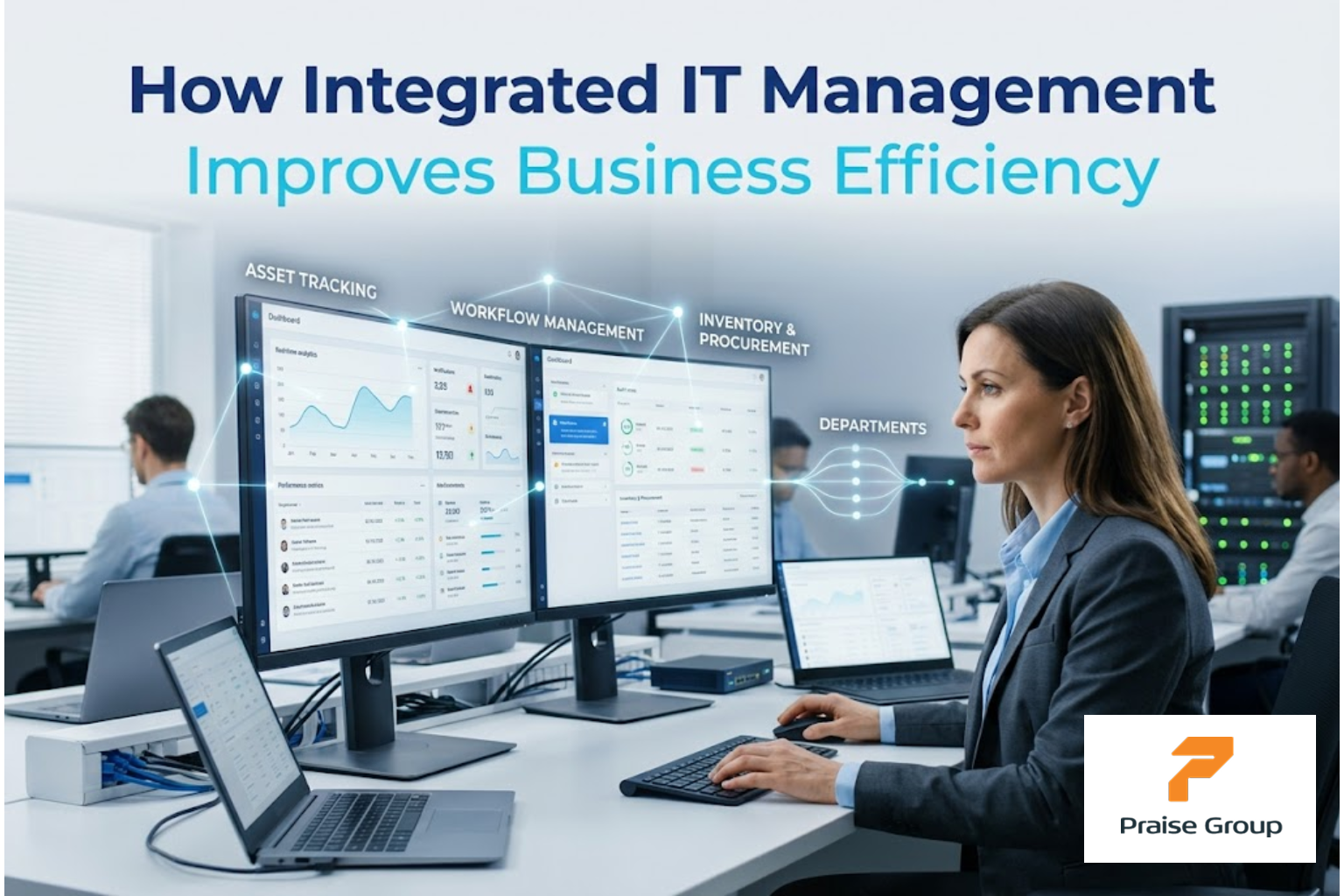

In today’s digital landscape, businesses rely heavily on technology to operate efficiently. However, managing IT assets, repairs, procurement, and support through disconnected systems often leads to inefficiencies and confusion.
Integrated IT management solves this problem by bringing all processes into a single platform. It improves coordination, enhances visibility, and boosts overall productivity, enabling organizations to transition from fragmented operations to a streamlined and connected ecosystem.
Challenges Without Integrated IT Systems
Organizations that lack integrated IT management systems often face:
- Data silos across departments
- Inconsistent workflows and processes
- Delays in issue resolution
- Limited visibility into operations
In addition, businesses may experience duplicate data entries, miscommunication between teams, and increased operational costs. These challenges reduce efficiency and create significant operational risks.
What is Integrated IT Management
Integrated IT management is a unified approach that combines multiple IT processes into one centralized system. It typically includes:
- Asset lifecycle management
- Inventory and procurement management
- Warranty tracking and compliance
- Repair and maintenance workflows
This centralized system ensures that all IT operations are interconnected, providing better control, transparency, and efficiency.
Key Features of Integrated IT Management Systems
Modern IT management platforms offer powerful features that streamline operations:
- Centralized dashboards for real-time monitoring
- Automated workflows for service requests and approvals
- Asset tracking across multiple locations
- Integration with enterprise systems such as ERP and CRM
Advanced systems also include alerts, notifications, and reporting tools that help organizations stay proactive and avoid potential issues.
Improved Workflow Coordination
Integrated systems enable seamless collaboration across teams.
For example:
- Service teams can instantly access asset and repair data
- Procurement teams can monitor inventory and vendor requirements
- Management can track performance metrics in real time
This eliminates communication gaps, reduces manual effort, and improves operational efficiency across departments.
Enhanced Productivity and Operational Performance
Integrated IT management systems help businesses:
- Reduce downtime with faster issue resolution
- Improve employee productivity
- Optimize asset utilization
- Maintain consistent service quality
By automating repetitive tasks and improving process speed, employees can focus on strategic and high-value activities.
Strengthening After-Sales Support
A strong after-sales support system is essential for customer satisfaction and retention.
Integrated platforms enable:
- Efficient ticket management systems
- Faster response and resolution times
- Transparent communication with customers
- SLA tracking and compliance monitoring
This ensures a reliable, consistent, and high-quality customer support experience.
Data Analytics and Business Insights
Data-driven decision-making is critical for modern businesses.
Integrated IT systems provide valuable insights such as:
- Asset performance trends
- Service efficiency metrics
- Cost analysis and optimization opportunities
With real-time analytics, organizations can identify inefficiencies, improve strategies, and make informed decisions for long-term growth.
Cost Reduction and Resource Optimization
Integrated IT management helps reduce costs and improve resource utilization by:
- Eliminating unnecessary asset purchases
- Optimizing inventory management
- Reducing downtime-related losses
- Improving workforce efficiency
This results in better financial control and higher return on investment.
Future-Ready IT Infrastructure
Integrated IT systems prepare businesses for future growth by:
- Supporting digital transformation initiatives
- Enabling automation and AI-driven processes
- Improving scalability and flexibility
- Adapting quickly to changing business needs
Organizations become more agile, competitive, and ready for technological advancements.
Why Businesses Are Moving Toward Integration
More organizations are adopting integrated IT management because it:
- Simplifies complex operations
- Improves decision-making
- Enhances service delivery
- Supports business scalability
It is becoming a core requirement for modern enterprises looking to stay competitive.
Conclusion
Integrated IT management is a powerful solution for improving business efficiency.
By unifying processes, enhancing visibility, and enabling automation, organizations can reduce costs, improve productivity, and deliver better services.
It is not just a technological upgrade — it is a strategic investment in building smarter, more efficient, and future-ready business operations.


Leave a reply