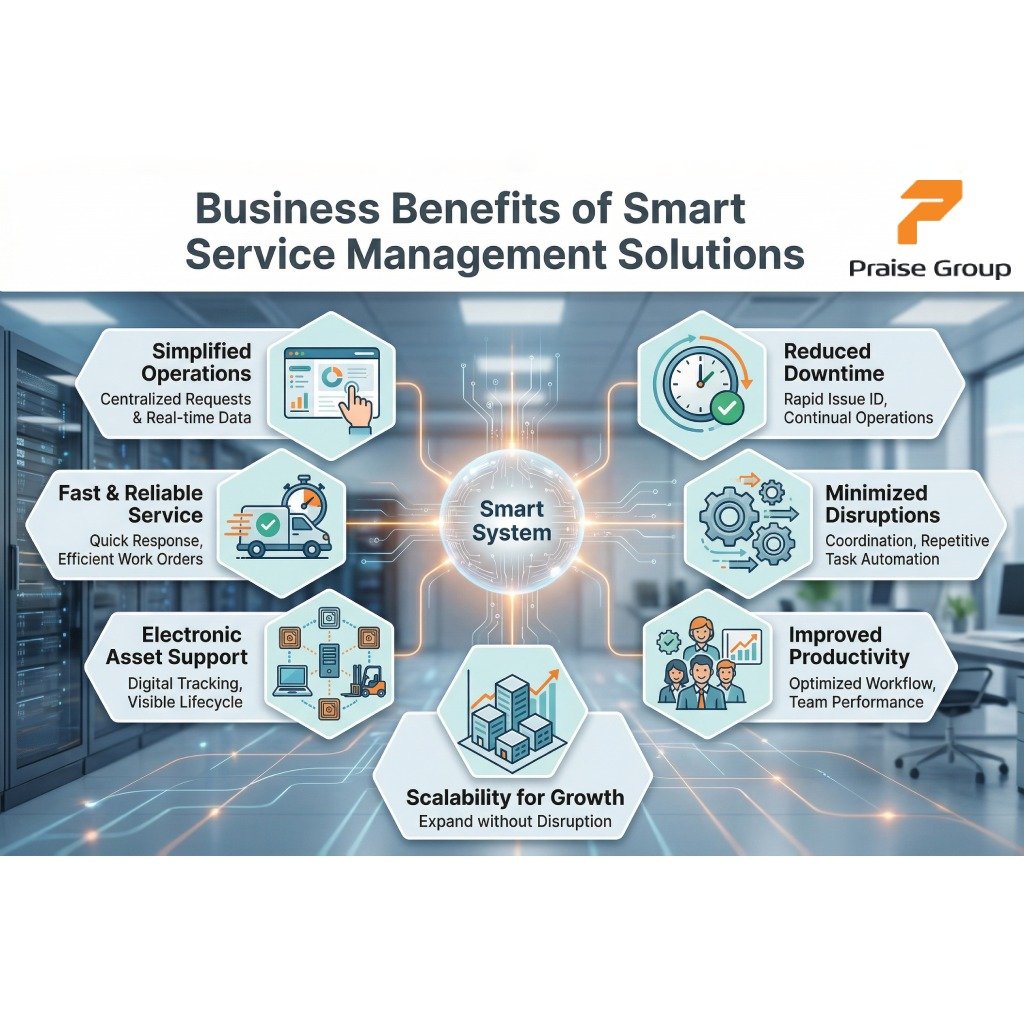



In today’s competitive business environment, efficiency, speed, and reliability are essential for success. Organizations are constantly looking for ways to optimize operations, reduce downtime, and improve overall productivity. Smart service management solutions are helping businesses achieve these goals by streamlining processes and improving operational control.
Easy and Simplified Operations
One of the biggest advantages of modern service management systems is simplicity.
Businesses can:
- Manage all service requests in one place
- Track assets and repairs with ease
- Access real-time data without complexity
A user-friendly system reduces training time and allows teams to adapt quickly, improving overall efficiency.
Fast and Reliable Service Delivery
Speed is critical in today’s business landscape. Delays can lead to lost productivity and customer dissatisfaction.
Smart solutions ensure:
- Faster response to service requests
- Efficient work order management
- Reliable tracking of repairs and maintenance
This results in quicker resolutions and smoother operations.
Electronic Asset Support Solutions
Managing assets manually can be time-consuming and error-prone.
Electronic asset support systems provide:
- Digital tracking of all assets
- Complete visibility of asset lifecycle
- Automated updates on status and usage
This helps businesses maintain better control over their resources and make informed decisions.
Reduced Downtime
Downtime can significantly impact business performance.
With streamlined service management, organizations can:
- Identify issues quickly
- Resolve problems faster
- Maintain continuous operations
Reduced downtime leads to higher productivity and improved business continuity.
Minimized Operational Disruptions
Operational disruptions can affect workflow and efficiency across departments.
Smart systems help by:
- Ensuring smooth coordination between teams
- Automating repetitive processes
- Providing real-time updates
This reduces strain on operations and keeps business processes running smoothly.
Improved Productivity and Efficiency
When systems are optimized, employees can focus on their core responsibilities instead of dealing with operational challenges.
Benefits include:
- Better time management
- Increased team productivity
- More efficient resource utilization
This leads to improved overall business performance.
Scalability for Growing Businesses
As businesses grow, managing operations becomes more complex.
Smart service solutions are scalable and allow organizations to:
- Handle increasing workloads efficiently
- Expand operations without disruption
- Maintain consistent performance
This ensures long-term sustainability and growth.
Conclusion
Smart service management solutions provide a wide range of business benefits, from simplifying operations to reducing downtime and improving efficiency.
By adopting modern systems, organizations can enhance productivity, minimize disruptions, and create a more reliable and scalable operational environment.


Leave a reply