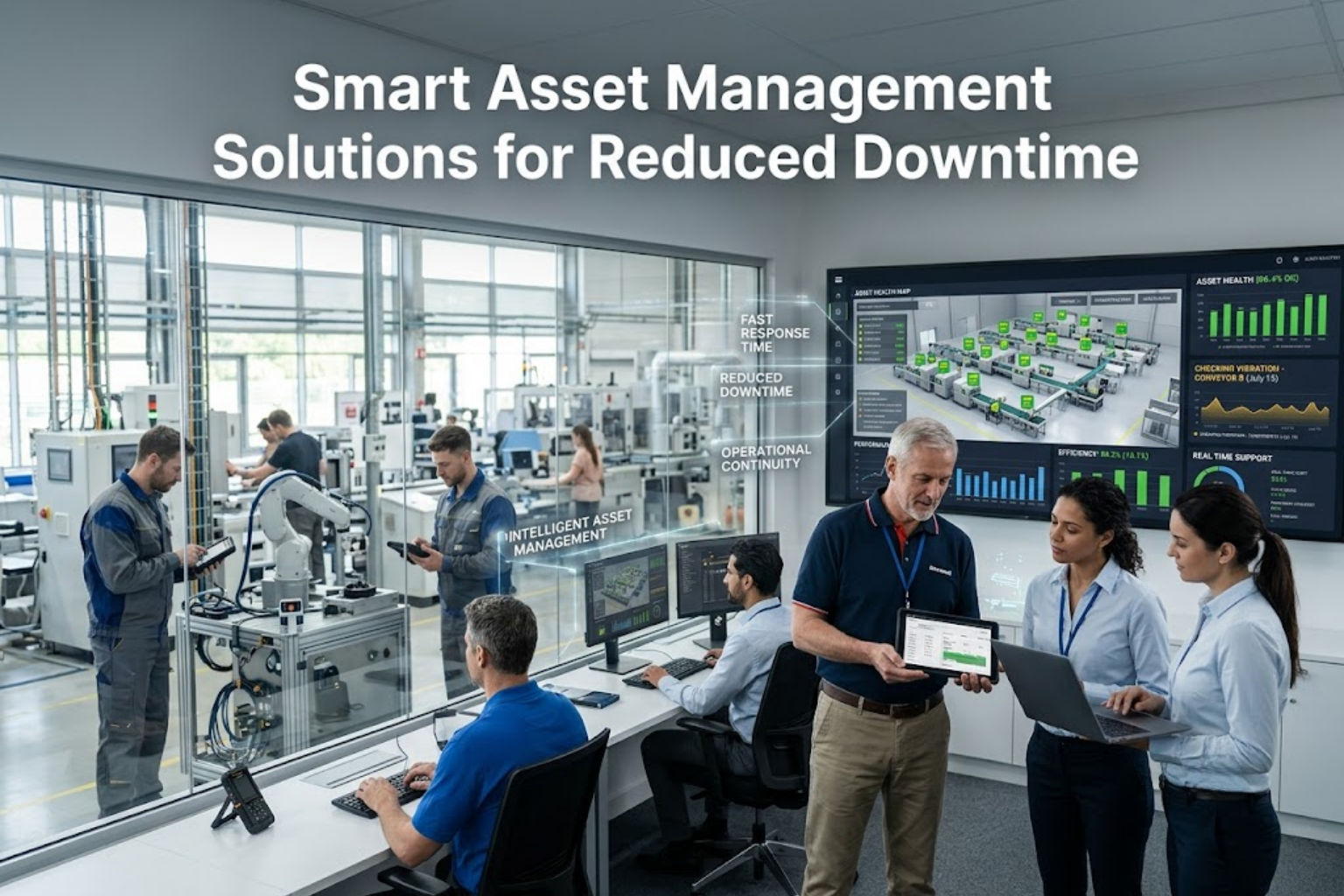


Modern businesses rely on critical equipment and assets to maintain productivity, operational efficiency, and customer satisfaction. Unexpected equipment failures and unplanned downtime can disrupt operations, increase maintenance costs, and reduce profitability. Traditional maintenance methods often rely on reactive repairs, making it difficult to prevent costly breakdowns. Smart asset management solutions are transforming maintenance by combining Artificial Intelligence (AI), IoT connectivity, real-time monitoring, and predictive analytics into one intelligent platform.
By continuously monitoring equipment performance and asset health, organizations can detect potential issues early, optimize maintenance schedules, extend asset life, and significantly reduce downtime.
The Importance of Smart Asset Management
Every organization depends on reliable equipment to keep operations running smoothly. Whether in manufacturing, healthcare, logistics, commercial facilities, or utilities, asset failures can result in production delays, financial losses, and reduced customer satisfaction. Smart asset management provides continuous visibility into equipment performance, enabling proactive maintenance and better operational planning.
AI-Powered Predictive Maintenance
Artificial Intelligence analyzes operational data collected from connected assets to identify performance trends and detect anomalies before failures occur. Instead of waiting for equipment to break down, predictive maintenance recommends service based on actual equipment condition. This proactive approach minimizes unexpected failures, lowers repair costs, and improves overall reliability.
Real-Time Asset Monitoring
IoT-enabled sensors continuously monitor equipment health by collecting data such as temperature, vibration, pressure, energy consumption, and operational status. Real-time dashboards provide maintenance teams with instant visibility into asset performance, allowing faster response to potential issues and improving maintenance efficiency.
Centralized Asset Management
Modern asset management platforms provide a centralized dashboard where organizations can monitor multiple facilities, production lines, and equipment from a single interface. Maintenance teams can access asset history, maintenance schedules, performance reports, and real-time alerts, enabling better coordination and faster decision-making.
Reducing Downtime and Improving Productivity
Unplanned downtime directly impacts business performance. Smart asset management solutions help identify problems before they become critical, allowing maintenance to be scheduled during planned service windows. This reduces production interruptions, increases equipment availability, and improves overall operational continuity.
Data-Driven Maintenance Decisions
Advanced analytics convert equipment data into meaningful business insights. Organizations can evaluate asset performance, monitor maintenance trends, measure equipment utilization, and identify recurring issues. These insights support smarter investment decisions while optimizing maintenance strategies and resource allocation.
Extending Asset Lifespan
Regular monitoring and predictive maintenance reduce unnecessary wear and tear on equipment. By servicing assets at the right time rather than following fixed schedules, businesses can maximize equipment lifespan, improve return on investment, and reduce capital replacement costs.
Benefits Across Industries
Smart asset management delivers value across multiple industries, including manufacturing, healthcare, logistics, construction, utilities, and commercial facilities. Organizations benefit from improved equipment reliability, lower maintenance expenses, better regulatory compliance, increased productivity, and stronger business continuity.
The Future of Intelligent Asset Management
As AI, Machine Learning, IoT, and cloud technologies continue to evolve, asset management systems will become increasingly autonomous. Future platforms will offer self-diagnosing equipment, automated maintenance scheduling, digital twins, predictive failure forecasting, and deeper integration with enterprise systems, creating highly efficient and connected operations.
Conclusion
Smart asset management solutions are transforming how businesses monitor, maintain, and optimize their critical equipment. By combining AI-powered analytics, IoT connectivity, predictive maintenance, and real-time monitoring, organizations can reduce downtime, improve operational efficiency, extend asset lifespan, and lower maintenance costs.
As industries continue to embrace digital transformation, intelligent asset management will play a key role in building more reliable, productive, and future-ready operations.


Leave a reply